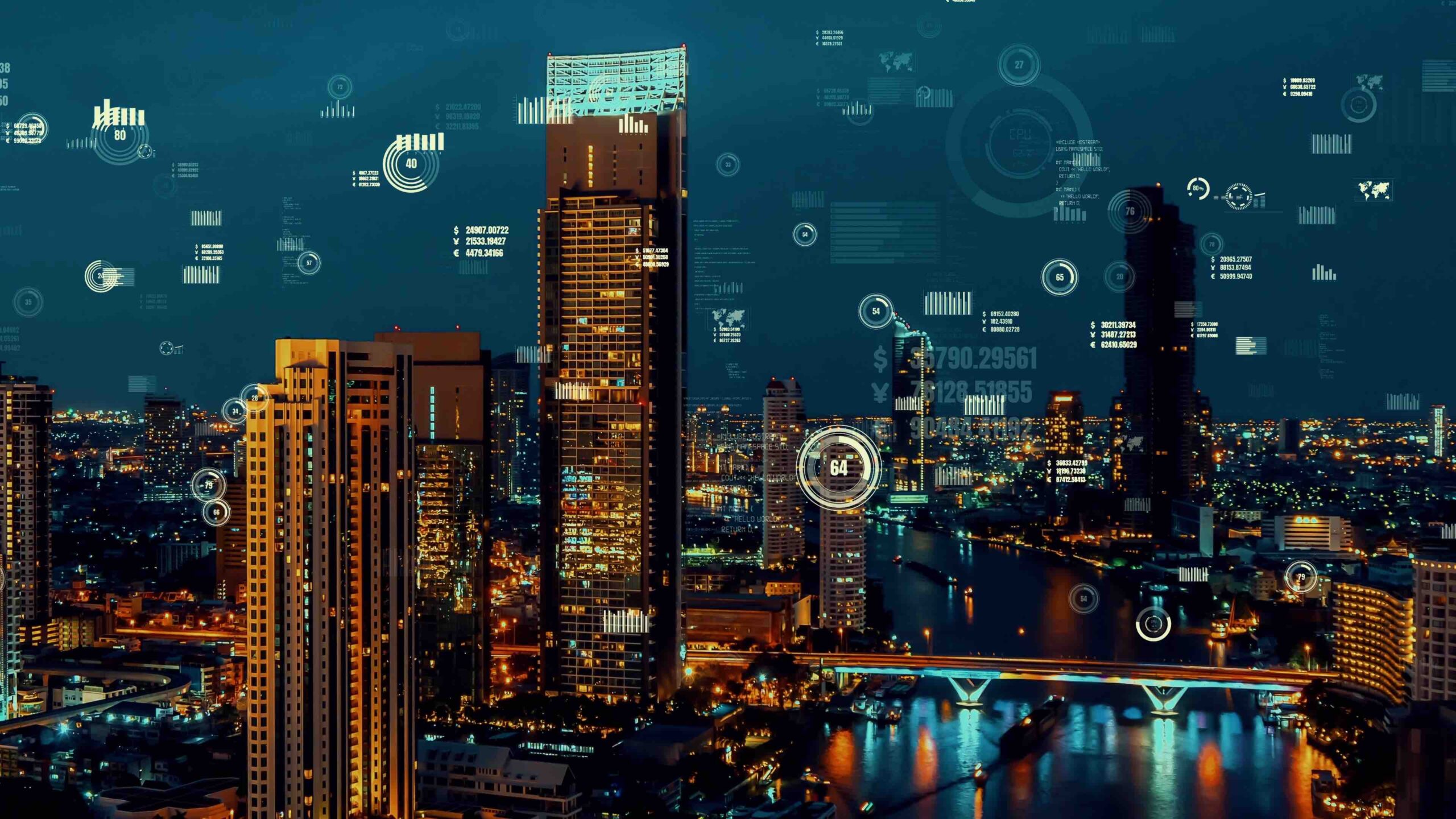
Cities are growing faster than ever, and urban populations are facing increasing challenges—traffic congestion, energy inefficiency, pollution, and strain on public services. To address these challenges, cities are turning to technology, and at the heart of this transformation is the Internet of Things (IoT). By connecting devices, sensors, and systems, IoT is enabling smarter, more efficient, and more responsive urban environments.
What Makes a City “Smart”?
A smart city leverages technology and data to improve the quality of life for its residents, optimize resource usage, and streamline governance. IoT acts as the backbone of this infrastructure, providing real-time insights that enable better decision-making across transportation, energy, public safety, healthcare, and more.
Key Applications of IoT in Smart Cities
- Traffic and Transportation Management
IoT sensors and connected devices monitor traffic flow, congestion, and public transit usage in real time. Smart traffic lights adjust dynamically to reduce bottlenecks, while predictive analytics help cities plan for future transportation needs. This reduces commute times, lowers emissions, and improves urban mobility. - Energy Efficiency and Smart Grids
IoT-enabled smart grids and meters monitor electricity consumption, detect outages, and optimize energy distribution. Buildings equipped with connected sensors can regulate lighting, heating, and cooling based on occupancy and demand, significantly reducing waste and costs. - Environmental Monitoring
Air quality sensors, noise monitors, and water quality devices provide real-time data on environmental conditions. City planners can use this information to implement policies that improve public health, from pollution control to waste management. - Public Safety and Emergency Response
IoT devices support smarter emergency management by monitoring fire hazards, detecting accidents, and alerting authorities instantly. Connected surveillance systems enhance security, while predictive analytics help prevent incidents before they occur. - Healthcare and Citizen Services
IoT enables remote health monitoring, tracking patient data, and alerting healthcare providers when intervention is needed. Municipal services like waste collection, water supply, and street lighting are also optimized through connected sensors, creating a more responsive urban ecosystem.
Benefits of IoT-Powered Smart Cities
- Efficiency: Optimized resource allocation reduces operational costs and energy consumption.
- Sustainability: Smarter urban planning helps reduce pollution, manage waste, and support renewable energy.
- Quality of Life: Residents experience safer, more convenient, and healthier urban environments.
- Data-Driven Governance: Real-time insights allow city authorities to make informed, proactive decisions.
Challenges and Considerations
Implementing IoT at scale is not without challenges. Data privacy, security, interoperability, and infrastructure costs are key concerns. Cities must adopt standards, ensure robust cybersecurity, and design systems that balance efficiency with citizen trust.
The Future of Smart Cities
The next generation of urban spaces will be hyper-connected, combining IoT with AI, edge computing, and 5G networks. These technologies will enable predictive urban management, autonomous mobility, and even personalized city services for residents.
Smart cities are not just about technology they are about creating sustainable, human-centered environments that respond dynamically to the needs of their citizens. IoT is the engine driving this transformation, turning the vision of future-ready cities into reality.
Read more on Crenov8:
The Future of Management Consulting: Embracing AI and Automation
Cybersecurity in the Age of Emerging Tech: The Next Frontier
 CRENOV8